

ISO 45001 Certification in Saudi Arabia: Everything You Need to Know
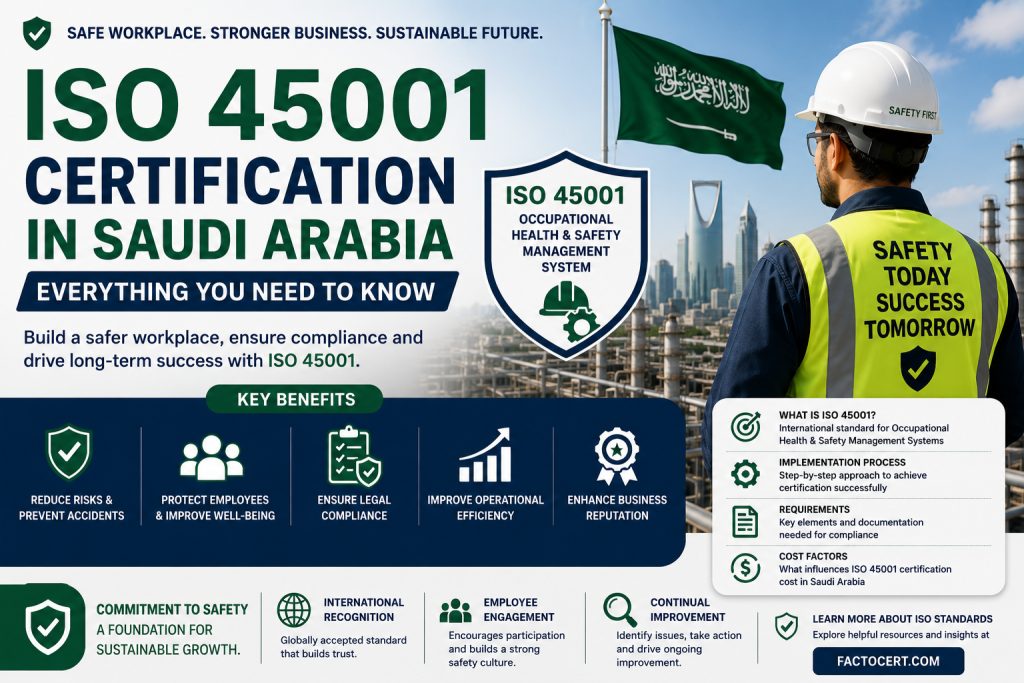
Ensuring a safe and healthy workplace is no longer just a legal responsibility—it has become an essential part of building a resilient and successful business. As organizations across Saudi Arabia continue to expand, many are adopting internationally recognized management systems to improve occupational health and safety. ISO 45001 Certification in Saudi Arabia provides a structured framework for identifying workplace hazards, reducing risks, and promoting continual improvement. Whether you own a small enterprise or manage a large industrial operation, understanding how ISO 45001 works can help you strengthen workplace safety while supporting long-term business performance.
What Is ISO 45001 Certification in Saudi Arabia?
ISO 45001 Certification in Saudi Arabia is based on the international ISO 45001 standard for Occupational Health and Safety Management Systems (OHSMS). It helps organizations establish processes that identify workplace hazards, assess occupational risks, and implement controls to protect employees and other interested parties.
Unlike traditional safety programs, ISO 45001 follows a systematic approach that integrates occupational health and safety into everyday business operations. The standard encourages leadership involvement, employee participation, and continual improvement to create safer working environments.
Organizations across industries—including construction, manufacturing, healthcare, logistics, oil and gas, and utilities—can benefit from implementing ISO 45001.
Why Businesses Should Consider ISO 45001 Certification in Saudi Arabia
Implementing ISO 45001 Certification in Saudi Arabia offers several advantages beyond meeting regulatory expectations.
Some of the key benefits include:
- Reducing workplace injuries and occupational illnesses
- Improving compliance with health and safety regulations
- Strengthening risk identification and hazard control
- Increasing employee awareness and engagement
- Improving operational efficiency through proactive risk management
- Building confidence among customers, suppliers, and stakeholders
- Supporting continual improvement of workplace safety performance
Organizations that invest in occupational health and safety often experience fewer disruptions, lower incident-related costs, and stronger employee morale.
Businesses looking for additional implementation guidance can explore ISO 45001 Certification in Saudi Arabia to better understand the certification process.
How the Certification Process Works
Obtaining ISO 45001 Certification in Saudi Arabia involves several well-defined stages designed to ensure the effectiveness of the Occupational Health and Safety Management System.
Understand the Standard
Organizations should first become familiar with ISO 45001 requirements and evaluate how they apply to their operations.
Conduct a Gap Analysis
A gap analysis compares existing health and safety practices with ISO 45001 requirements to identify areas requiring improvement.
Develop the Management System
This includes creating documented procedures, health and safety policies, hazard identification methods, emergency response plans, and measurable objectives.
Train Employees
Employee awareness is critical to successful implementation. Regular training helps employees understand their responsibilities and encourages active participation in workplace safety.
Perform Internal Audits
Internal audits verify that the management system is operating effectively and identify opportunities for continual improvement before the certification audit.
Certification Audit
An accredited certification body conducts Stage 1 and Stage 2 audits to evaluate documentation and implementation before granting certification.
Common Requirements for Successful Implementation
Organizations pursuing ISO 45001 Certification in Saudi Arabia should focus on several important requirements throughout implementation.
These include:
- Leadership commitment
- Employee consultation and participation
- Hazard identification and risk assessment
- Compliance with applicable legal requirements
- Emergency preparedness
- Performance monitoring
- Internal audits
- Corrective actions
- Management reviews
Meeting these requirements helps ensure that the Occupational Health and Safety Management System remains effective over time.
Businesses interested in learning more about ISO standards, management systems, and certification practices can also explore educational resources available through Factocert.
Maintaining ISO 45001 Certification
Certification is not a one-time achievement. Maintaining ISO 45001 Certification in Saudi Arabia requires continuous monitoring, evaluation, and improvement.
Organizations should:
- Review workplace hazards regularly
- Update risk assessments as operations change
- Monitor safety performance indicators
- Conduct periodic internal audits
- Train employees continuously
- Complete surveillance audits conducted by the certification body
This ongoing commitment helps organizations adapt to changing workplace conditions while maintaining compliance with international standards.
For official information regarding ISO 45001 requirements, businesses can refer to the International Organization for Standardization’s ISO 45001 Occupational Health and Safety Management System:
https://www.iso.org/iso-45001-occupational-health-and-safety.html
Conclusion
ISO 45001 Certification in Saudi Arabia provides organizations with a practical framework for improving workplace safety, managing occupational risks, and promoting continual improvement. By implementing an effective Occupational Health and Safety Management System, businesses can reduce workplace incidents, improve regulatory compliance, strengthen employee engagement, and support sustainable growth. As workplace safety continues to play an increasingly important role across Saudi Arabia, adopting ISO 45001 helps organizations build safer workplaces while preparing for long-term operational success.