

ISO 45001 Certification in Saudi Arabia: Benefits, Requirements, Cost & Process
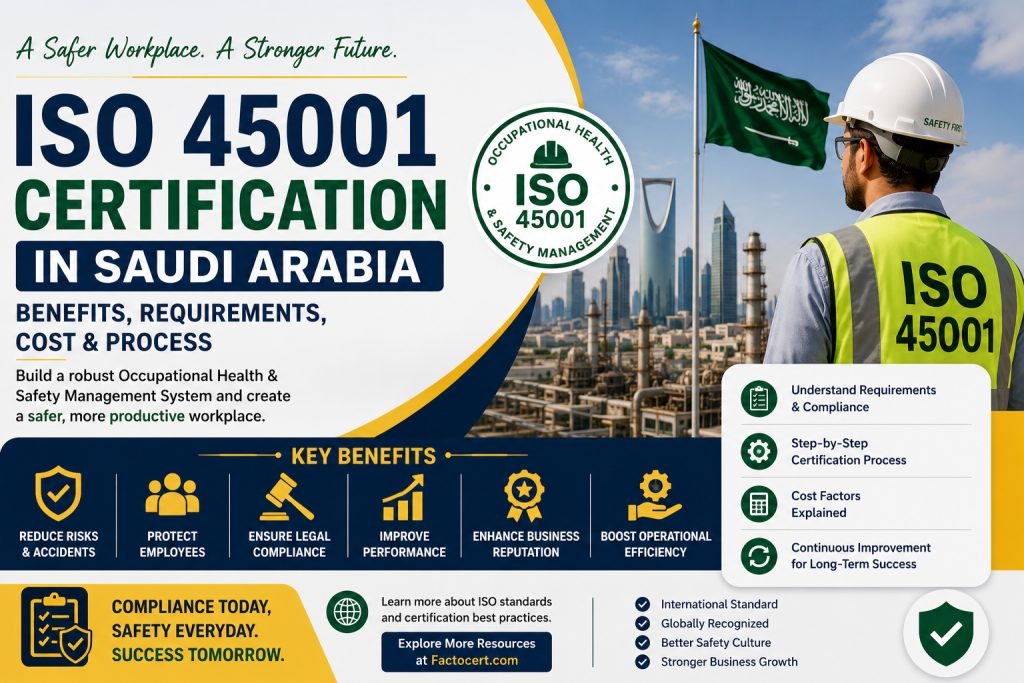
As workplace safety continues to gain importance across Saudi Arabia, organizations are increasingly adopting internationally recognized standards to improve occupational health and safety. ISO 45001 Certification in Saudi Arabia provides businesses with a practical framework for identifying workplace hazards, reducing risks, and creating a safer working environment. Whether your organization operates in construction, manufacturing, healthcare, logistics, or energy, understanding the benefits, certification requirements, implementation process, and associated costs can help you make informed decisions. This guide explains everything business owners and managers need to know about ISO 45001 in 2026.
Benefits of ISO 45001 Certification in Saudi Arabia
ISO 45001 Certification in Saudi Arabia helps organizations establish an Occupational Health and Safety Management System (OHSMS) that protects employees while improving operational efficiency.
Some of the major benefits include:
- Reduced workplace accidents and occupational illnesses
- Improved compliance with occupational health and safety regulations
- Better identification and management of workplace risks
- Increased employee participation and safety awareness
- Improved organizational reputation among customers and stakeholders
- Enhanced productivity through fewer work disruptions
- Greater confidence during supplier evaluations and contract opportunities
Beyond compliance, ISO 45001 encourages organizations to build a long-term culture of safety and continual improvement.
Requirements for ISO 45001 Certification in Saudi Arabia
To achieve ISO 45001 Certification in Saudi Arabia, organizations must implement the requirements outlined in the ISO 45001 standard.
The main requirements include:
- Establishing an Occupational Health and Safety Management System
- Identifying workplace hazards and assessing risks
- Defining health and safety objectives
- Ensuring leadership commitment and employee participation
- Maintaining documented information and procedures
- Monitoring performance and evaluating compliance
- Conducting internal audits and management reviews
- Taking corrective actions for identified nonconformities
Organizations should also ensure that applicable legal and regulatory obligations related to workplace safety are incorporated into their management system.
Businesses looking for more detailed implementation guidance can explore ISO 45001 Certification in Saudi Arabia as an additional educational resource.
Understanding the ISO 45001 Certification Process
The certification process follows a logical sequence designed to help organizations establish an effective safety management system.
1. Gap Analysis
Assess existing workplace safety practices and compare them with ISO 45001 requirements to identify improvement areas.
2. System Development
Develop policies, procedures, risk assessment methods, emergency response plans, and documented processes aligned with the standard.
3. Employee Training
Train employees on occupational health and safety responsibilities, hazard reporting, emergency procedures, and organizational objectives.
4. Internal Audit
Conduct internal audits to verify that the Occupational Health and Safety Management System operates effectively and complies with ISO requirements.
5. Certification Audit
An accredited certification body performs Stage 1 and Stage 2 audits before issuing the certification once compliance has been demonstrated.
Following a structured implementation process significantly improves the likelihood of successful certification.
What Does ISO 45001 Certification Cost?
The cost of ISO 45001 Certification in Saudi Arabia varies depending on several organizational factors rather than a fixed pricing structure.
Some of the factors that influence certification costs include:
- Organization size
- Number of employees
- Number of business locations
- Operational complexity
- Existing health and safety management practices
- Scope of certification
- Certification body’s audit fees
Organizations should also consider implementation expenses such as employee training, documentation development, internal audits, and system improvements. Since every organization has different operational requirements, obtaining quotations from accredited certification bodies provides the most accurate estimate.
Businesses interested in learning more about ISO standards, certification practices, and management systems can also explore educational resources available through Factocert.
Tips for Maintaining Certification
Receiving certification is only one part of the journey. Maintaining ISO 45001 Certification in Saudi Arabia requires continuous monitoring and improvement.
Organizations should:
- Conduct regular internal audits
- Review workplace hazards periodically
- Update risk assessments when operations change
- Monitor corrective actions
- Train employees continuously
- Hold management review meetings
- Track health and safety performance indicators
A proactive approach helps organizations maintain compliance while improving workplace safety over time.
For official guidance on ISO 45001 requirements and principles, businesses can refer to the International Organization for Standardization’s official page:
https://www.iso.org/iso-45001-occupational-health-and-safety.html
Conclusion
ISO 45001 Certification in Saudi Arabia offers organizations a practical framework for improving workplace safety, reducing occupational risks, and meeting internationally recognized health and safety standards. Understanding the benefits, implementation requirements, certification process, and cost factors enables businesses to prepare effectively and make informed decisions. By continually reviewing workplace risks, engaging employees, and improving safety performance, organizations can maintain compliance while supporting long-term operational excellence and sustainable business growth.