

ISO 45001 Certification in Saudi Arabia: A Practical Guide to Occupational Health and Safety
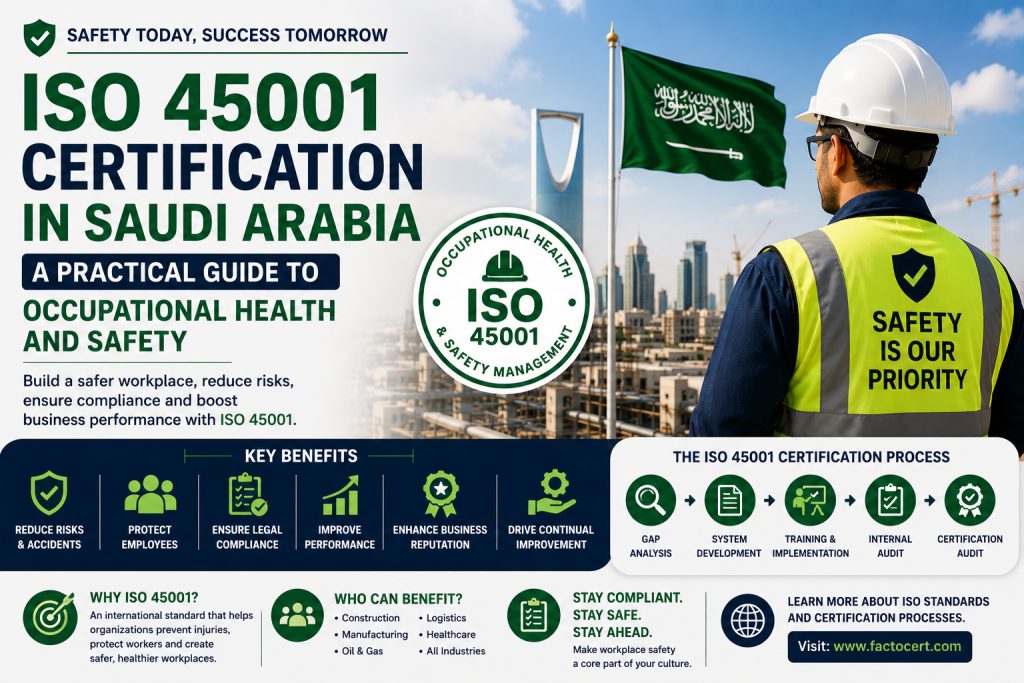
Creating a safe workplace is one of the most important responsibilities of any organization. In Saudi Arabia, businesses across industries are strengthening their occupational health and safety practices to protect employees, comply with regulations, and improve operational performance. ISO 45001 Certification in Saudi Arabia provides a globally recognized framework for managing workplace risks and promoting continual improvement. Whether your organization operates in construction, manufacturing, healthcare, logistics, or energy, implementing ISO 45001 helps establish a safer working environment while supporting long-term business success. This practical guide explains the purpose, benefits, requirements, and implementation process of the standard.
Understanding ISO 45001 Certification in Saudi Arabia
ISO 45001 Certification in Saudi Arabia is based on the international ISO 45001 standard for Occupational Health and Safety Management Systems (OHSMS). It helps organizations identify workplace hazards, assess occupational risks, and implement effective measures to prevent injuries and work-related illnesses.
Unlike reactive safety programs that respond only after incidents occur, ISO 45001 encourages organizations to proactively manage health and safety risks through planning, employee participation, performance monitoring, and continual improvement.
The standard is applicable to organizations of all sizes and sectors, making it suitable for both small businesses and large enterprises.
Benefits of ISO 45001 Certification in Saudi Arabia
Implementing ISO 45001 Certification in Saudi Arabia provides measurable advantages for organizations and their employees.
Some of the key benefits include:
- Reducing workplace accidents and occupational illnesses
- Improving compliance with occupational health and safety regulations
- Strengthening hazard identification and risk assessment
- Increasing employee involvement in workplace safety
- Improving operational efficiency through better risk management
- Enhancing organizational reputation with customers and stakeholders
- Supporting continual improvement across business operations
A well-managed Occupational Health and Safety Management System also contributes to higher employee morale, reduced downtime, and improved business resilience.
Organizations seeking practical implementation guidance can refer to ISO 45001 Certification in Saudi Arabia to better understand the certification process.
Practical Steps to Implement ISO 45001
Achieving ISO 45001 Certification in Saudi Arabia requires a structured approach to implementing an Occupational Health and Safety Management System.
Assess Current Practices
Review existing workplace safety policies, procedures, and operational controls to identify areas requiring improvement.
Identify Hazards and Evaluate Risks
Conduct comprehensive risk assessments to identify workplace hazards and determine appropriate preventive measures.
Develop Documented Procedures
Prepare policies, objectives, emergency response plans, operational controls, and documented processes that align with ISO 45001 requirements.
Train Employees
Employee awareness is essential. Staff members should understand workplace hazards, reporting procedures, emergency responses, and their role in maintaining a safe work environment.
Conduct Internal Audits
Internal audits help evaluate system performance, identify nonconformities, and support continual improvement before the certification audit.
Complete the Certification Audit
An accredited certification body performs Stage 1 and Stage 2 audits to verify compliance before granting certification.
Maintaining an Effective Occupational Health and Safety Management System
Obtaining ISO 45001 Certification in Saudi Arabia is only the beginning. Long-term success depends on maintaining and improving the management system.
Organizations should regularly:
- Review workplace risks
- Update hazard assessments
- Monitor health and safety objectives
- Conduct periodic internal audits
- Investigate incidents
- Implement corrective actions
- Hold management review meetings
- Provide ongoing employee training
Continual improvement ensures the system remains effective as workplace conditions and operational activities change.
Businesses interested in expanding their knowledge of ISO management systems and certification practices can also explore educational resources available through Factocert.
Common Challenges and How to Overcome Them
Organizations implementing ISO 45001 often encounter similar challenges during the certification journey.
Common issues include:
- Limited employee engagement
- Incomplete hazard identification
- Weak documentation practices
- Insufficient management commitment
- Delayed corrective actions
- Inconsistent monitoring of safety performance
These challenges can be addressed by encouraging leadership involvement, improving employee communication, and regularly reviewing the effectiveness of the Occupational Health and Safety Management System.
For official information about ISO 45001 and its requirements, businesses can refer to the International Organization for Standardization’s official guidance:
https://www.iso.org/iso-45001-occupational-health-and-safety.html
Conclusion
ISO 45001 Certification in Saudi Arabia provides organizations with a practical framework for improving workplace safety, managing occupational risks, and building a culture of continual improvement. By identifying hazards, implementing effective controls, engaging employees, and regularly reviewing safety performance, businesses can create healthier work environments while improving operational efficiency. As occupational health and safety continue to receive greater attention across Saudi Arabia, organizations that adopt ISO 45001 will be better prepared to support sustainable growth and long-term success.