

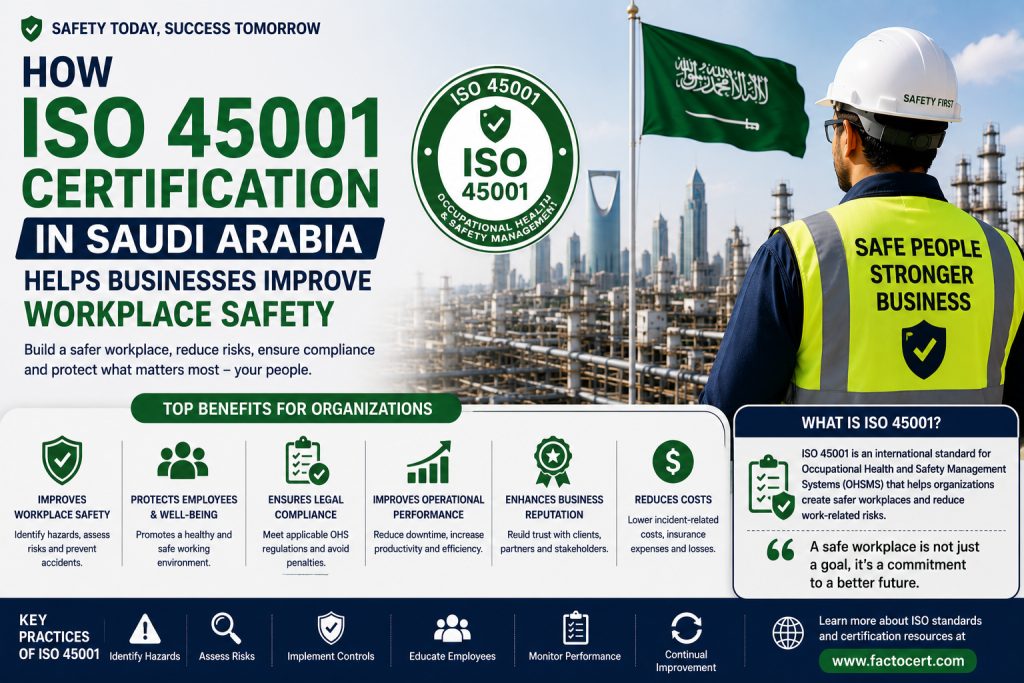
Workplace safety is one of the most important factors influencing business performance, employee wellbeing, and regulatory compliance. As organizations across Saudi Arabia continue to expand their operations, creating a safe working environment has become a strategic priority rather than simply a legal obligation. ISO 45001 Certification in Saudi Arabia provides businesses with an internationally recognized framework for managing occupational health and safety risks, preventing workplace incidents, and fostering a culture of continual improvement. Whether you operate in construction, manufacturing, healthcare, logistics, or another industry, implementing ISO 45001 can help improve workplace safety while supporting sustainable business growth.
Why ISO 45001 Certification in Saudi Arabia Is Important
ISO 45001 Certification in Saudi Arabia is based on the ISO 45001 standard for Occupational Health and Safety Management Systems (OHSMS). It provides organizations with a structured approach to identifying workplace hazards, assessing risks, and implementing effective controls that reduce accidents and occupational illnesses.
Rather than reacting after incidents occur, ISO 45001 focuses on preventing problems before they happen. It encourages leadership involvement, employee participation, and regular performance evaluation, making workplace safety an integral part of everyday business operations.
Organizations of all sizes can benefit from implementing the standard, regardless of their industry.
How ISO 45001 Improves Workplace Safety
One of the primary objectives of ISO 45001 Certification in Saudi Arabia is to create a safer work environment through systematic risk management.
Key ways the standard improves workplace safety include:
- Identifying workplace hazards before they cause incidents
- Conducting regular occupational risk assessments
- Implementing preventive and corrective safety measures
- Establishing emergency preparedness procedures
- Monitoring workplace safety performance
- Encouraging employee participation in health and safety initiatives
- Promoting continual improvement through regular reviews
These practices help organizations minimize workplace injuries while creating a culture where safety becomes everyone’s responsibility.
Businesses looking for detailed implementation guidance can explore ISO 45001 Certification in Saudi Arabia to better understand the certification process and Occupational Health and Safety Management System requirements.
Benefits Beyond Workplace Safety
Although improving employee safety is the primary goal, ISO 45001 Certification in Saudi Arabia also provides several additional business advantages.
Organizations often experience:
- Improved compliance with occupational health and safety regulations
- Reduced downtime caused by workplace accidents
- Lower incident-related costs
- Better employee morale and retention
- Increased operational efficiency
- Enhanced reputation with customers and business partners
- Stronger confidence among stakeholders
By reducing workplace disruptions and improving organizational processes, ISO 45001 contributes to long-term business resilience.
Steps to Implement ISO 45001 Successfully
Organizations seeking ISO 45001 Certification in Saudi Arabia typically follow a structured implementation process.
The key steps include:
Evaluate Existing Practices
Assess current occupational health and safety procedures to identify gaps compared with ISO 45001 requirements.
Identify Workplace Hazards
Perform detailed hazard identification and risk assessments across all operational activities.
Develop the Management System
Prepare documented policies, objectives, operational procedures, emergency plans, and monitoring processes.
Train Employees
Provide regular training so employees understand workplace risks, reporting procedures, and their responsibilities within the Occupational Health and Safety Management System.
Conduct Internal Audits
Internal audits verify system effectiveness and identify opportunities for improvement before certification.
Complete the Certification Audit
An accredited certification body evaluates the management system through Stage 1 and Stage 2 audits before issuing certification.
Maintaining Workplace Safety After Certification
Achieving certification is only the beginning. Maintaining ISO 45001 Certification in Saudi Arabia requires organizations to continually improve their Occupational Health and Safety Management System.
Recommended practices include:
- Conducting routine workplace inspections
- Reviewing risk assessments regularly
- Monitoring health and safety objectives
- Investigating incidents and near misses
- Updating procedures when operations change
- Holding management review meetings
- Providing continuous employee training
These activities help organizations maintain compliance while adapting to new workplace risks and operational changes.
Businesses interested in learning more about ISO management systems and certification practices can also explore educational resources available through Factocert.
For official guidance on ISO 45001 and Occupational Health and Safety Management Systems, organizations can refer to the International Organization for Standardization:
https://www.iso.org/iso-45001-occupational-health-and-safety.html
Conclusion
ISO 45001 Certification in Saudi Arabia provides businesses with a practical framework for improving workplace safety, reducing occupational risks, and supporting continual improvement. By implementing an effective Occupational Health and Safety Management System, organizations can create safer working environments, improve regulatory compliance, strengthen employee engagement, and enhance overall operational performance. As workplace safety expectations continue to evolve across Saudi Arabia, adopting ISO 45001 helps businesses build a strong foundation for sustainable growth and long-term success.