

How ISO 14001 Certification in Saudi Arabia Helps Achieve Environmental Compliance
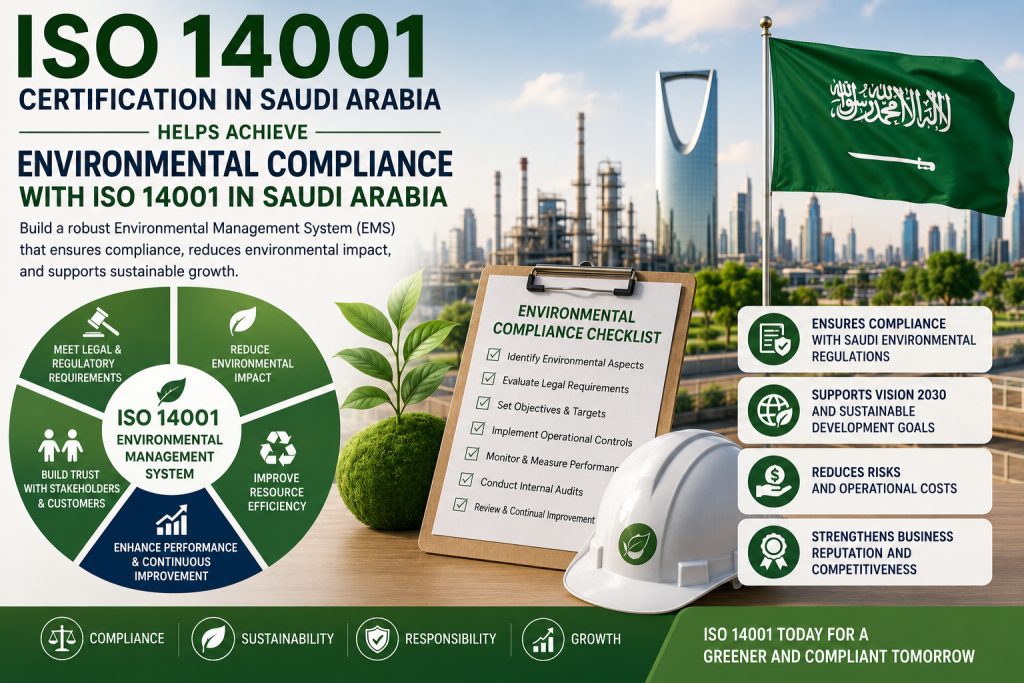
Environmental Compliance with ISO 14001 in Saudi Arabia has become a key priority for organizations seeking sustainable growth while meeting legal and regulatory requirements. As Saudi Arabia advances its Vision 2030 initiatives, businesses across manufacturing, construction, energy, logistics, healthcare, and other sectors are expected to adopt environmentally responsible practices. ISO 14001 provides a globally recognized framework that helps organizations establish an Environmental Management System (EMS), reduce environmental risks, and continually improve their environmental performance.
By implementing Environmental Compliance with ISO 14001 in Saudi Arabia, businesses can not only comply with environmental regulations but also improve operational efficiency, reduce waste, and strengthen their reputation among customers, investors, and stakeholders.
Why Environmental Compliance with ISO 14001 in Saudi Arabia Is Important
Environmental compliance means adhering to applicable environmental laws, regulations, and organizational commitments. Businesses that fail to comply may face legal penalties, operational disruptions, and reputational damage.
Implementing Environmental Compliance with ISO 14001 in Saudi Arabia helps organizations systematically identify environmental obligations, evaluate risks, and establish processes that ensure ongoing compliance. The standard follows a continuous improvement approach, making it easier for organizations to adapt to changing regulations and environmental expectations.
According to the official ISO 14001 Environmental Management Systems guidance, ISO 14001 provides organizations with practical tools to improve environmental performance while meeting compliance obligations.
How ISO 14001 Supports Environmental Compliance
Identifies Environmental Aspects and Legal Requirements
The first step toward Environmental Compliance with ISO 14001 in Saudi Arabia is identifying activities that may impact the environment.
Organizations evaluate factors such as:
- Air emissions
- Water consumption
- Waste generation
- Hazardous materials
- Energy usage
- Noise pollution
Once these environmental aspects are identified, businesses determine the legal and regulatory requirements applicable to their operations. This structured approach helps prevent compliance gaps.
Establishes an Effective Environmental Management System
ISO 14001 requires organizations to develop documented policies, procedures, objectives, and operational controls.
An effective Environmental Management System enables businesses to:
- Monitor environmental performance
- Control environmental risks
- Maintain documentation
- Improve operational consistency
- Demonstrate compliance during audits
Organizations interested in understanding the implementation process can explore ISO 14001 certification in Saudi Arabia for additional guidance.
Business Benefits Beyond Compliance
Although regulatory compliance is one of the primary objectives, implementing Environmental Compliance with ISO 14001 in Saudi Arabia provides several additional business advantages.
Improved Resource Efficiency
Organizations often identify opportunities to reduce:
- Energy consumption
- Water usage
- Material waste
- Operational costs
Improved resource management supports both sustainability goals and financial performance.
Better Risk Management
Environmental incidents can disrupt operations and increase costs.
ISO 14001 promotes proactive risk assessment by helping organizations identify potential environmental hazards before they become significant problems. This reduces the likelihood of fines, accidents, and environmental damage.
Stronger Market Reputation
Customers, investors, and business partners increasingly prefer companies that demonstrate environmental responsibility.
Organizations implementing Environmental Compliance with ISO 14001 in Saudi Arabia often gain greater credibility by showing their commitment to internationally recognized environmental management practices.
Best Practices for Maintaining Environmental Compliance
Achieving certification is only the beginning. Organizations should continually improve their Environmental Management System through regular monitoring and evaluation.
Recommended best practices include:
- Conducting periodic environmental audits
- Reviewing legal compliance regularly
- Training employees on environmental responsibilities
- Monitoring environmental objectives
- Recording environmental performance data
- Implementing corrective actions when necessary
Businesses seeking broader information about environmental management systems can also refer to ISO 14001 Certification as an additional educational resource.
Supporting Saudi Arabia’s Sustainability Goals
Saudi Arabia continues to promote sustainable development through initiatives that encourage environmental protection, responsible resource management, and reduced environmental impact. Organizations implementing Environmental Compliance with ISO 14001 in Saudi Arabia contribute directly to these objectives while strengthening their own operational resilience.
Whether operating in manufacturing, construction, logistics, healthcare, or energy, businesses benefit from a structured Environmental Management System that supports compliance and continual improvement.
Conclusion
Implementing Environmental Compliance with ISO 14001 in Saudi Arabia enables organizations to manage environmental responsibilities more effectively while meeting legal requirements and improving operational performance. Beyond regulatory compliance, ISO 14001 helps businesses reduce waste, optimize resources, strengthen stakeholder confidence, and support long-term sustainability.
As environmental expectations continue to evolve, organizations that invest in Environmental Compliance with ISO 14001 in Saudi Arabia will be better positioned to achieve compliance, minimize risks, and contribute to a more sustainable future.