

How to Get ISO 14001 Certification in Saudi Arabia: Step-by-Step Process
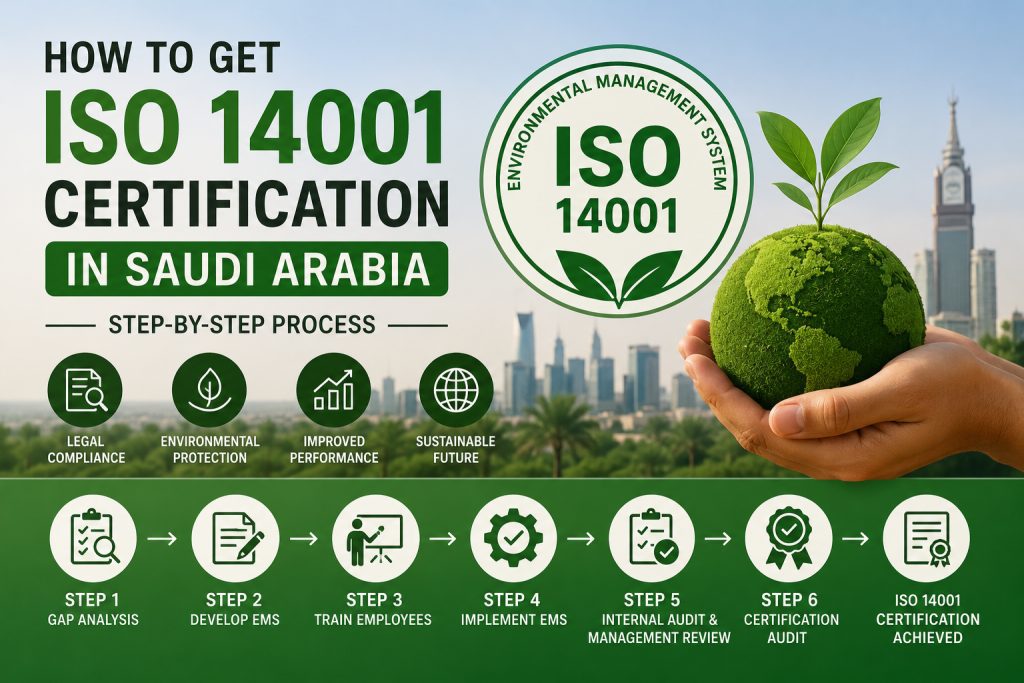
Environmental sustainability has become a key priority for businesses across Saudi Arabia. As organizations align with Vision 2030 and global environmental standards, many are adopting Environmental Management Systems (EMS) to improve operational efficiency and reduce their environmental impact. One of the most recognized ways to demonstrate this commitment is by obtaining ISO 14001 Certification Saudi Arabia.
One of the most effective ways to improve environmental performance is by obtaining ISO 14001 certification in Saudi Arabia. This internationally recognized Environmental Management System (EMS) standard helps businesses reduce environmental impact, meet legal requirements, and achieve continual improvement. Organizations investing in ISO 14001 certification in Saudi Arabia also demonstrate their commitment to sustainability and responsible business practices.
ISO 14001 Certification Saudi Arabia helps organizations establish a structured Environmental Management System (EMS) that identifies environmental risks, ensures legal compliance, and promotes continual improvement. Whether you operate in manufacturing, construction, logistics, healthcare, or any other industry, achieving ISO 14001 Certification Saudi Arabia can strengthen your reputation while improving environmental performance.
What is ISO 14001 Certification Saudi Arabia?
ISO 14001 is an internationally recognized standard developed by the International Organization for Standardization (ISO) for Environmental Management Systems. The standard provides organizations with a framework to manage environmental responsibilities systematically while improving sustainability and regulatory compliance.
Businesses pursuing ISO 14001 certification in Saudi Arabia establish a systematic approach to managing environmental responsibilities while improving operational efficiency and complying with international environmental standards..
For official information about the standard, visit the ISO 14001 Environmental Management Systems page published by ISO.
Why Businesses Need ISO 14001 Certification Saudi Arabia
Saudi Arabia is placing greater emphasis on sustainable development through Vision 2030. Companies are increasingly expected to operate responsibly while minimizing their environmental footprint.
Implementing ISO 14001 Certification Saudi Arabia provides several advantages:
- Improved environmental performance
- Better compliance with environmental regulations
- Reduced waste and energy consumption
- Enhanced corporate reputation
- Increased customer confidence
- Better resource management
- Reduced operational risks
- Greater opportunities for government and international contracts
Organizations with an effective Environmental Management System often experience cost savings through improved resource utilization and reduced environmental incidents.
Step-by-Step Process to Obtain ISO 14001 Certification Saudi Arabia
Achieving ISO 14001 Certification Saudi Arabia follows a structured implementation process. Each stage helps build an Environmental Management System that meets international requirements.
Step 1: Conduct a Gap Analysis
The first step is evaluating your current environmental management practices against ISO 14001 requirements.
A gap analysis identifies:
- Existing environmental controls
- Areas requiring improvement
- Legal and regulatory obligations
- Documentation requirements
- Potential environmental risks
This assessment creates a clear roadmap for implementation.
Step 2: Develop an Environmental Management System
Based on the gap analysis, the organization develops an Environmental Management System (EMS).
This includes:
- Environmental policy
- Objectives and targets
- Risk assessments
- Operational procedures
- Emergency preparedness plans
- Monitoring and measurement processes
The EMS should reflect the organization’s activities and environmental responsibilities.
Step 3: Train Employees
Employee awareness is essential for successful implementation.
Training should help employees understand:
- Environmental responsibilities
- Company policies
- Waste management procedures
- Emergency response
- Environmental objectives
When employees actively participate, the management system becomes part of everyday operations rather than simply documented procedures.
Step 4: Implement the EMS
After documentation and training, the Environmental Management System is implemented throughout the organization.
During this stage, businesses begin following environmental procedures, monitoring performance, recording environmental data, and managing identified risks.
Organizations seeking professional guidance for ISO 14001 certification in Saudi Arabia can learn more through ISO 14001 certification in Saudi Arabia, where they can explore the certification process and implementation requirements.
Step 5: Conduct Internal Audits and Management Review
Before certification, internal audits verify whether the Environmental Management System complies with ISO 14001 requirements.
Management then reviews:
- Environmental objectives
- Audit findings
- Compliance status
- Corrective actions
- Opportunities for continual improvement
Any identified non-conformities should be resolved before the external certification audit.
Step 6: Certification Audit
An accredited certification body conducts the final audit in two stages.
The audit evaluates:
- Documentation
- Environmental controls
- Employee awareness
- Legal compliance
- Continuous improvement activities
If the organization meets all requirements, it receives ISO 14001 Certification Saudi Arabia.
Maintaining ISO 14001 Certification Saudi Arabia
Certification is not the end of the journey. Organizations must continually maintain and improve their Environmental Management System.
Key maintenance activities include:
- Conducting regular internal audits
- Updating environmental objectives
- Reviewing legal requirements
- Monitoring environmental performance
- Training employees
- Implementing corrective actions
- Preparing for annual surveillance audits
Continual improvement ensures the management system remains effective and compliant over time.
Conclusion
Achieving ISO 14001 certification in Saudi Arabia is a valuable investment for organizations committed to environmental responsibility and sustainable growth. By implementing an effective Environmental Management System, businesses can improve compliance, reduce environmental risks, and enhance operational efficiency. As sustainability becomes increasingly important across industries, ISO 14001 certification in Saudi Arabia helps organizations build credibility, meet customer expectations, and support long-term business success.
Additional resources on Environmental Management Systems and certification best practices are available at Factocert’s ISO 14001 resource page.